

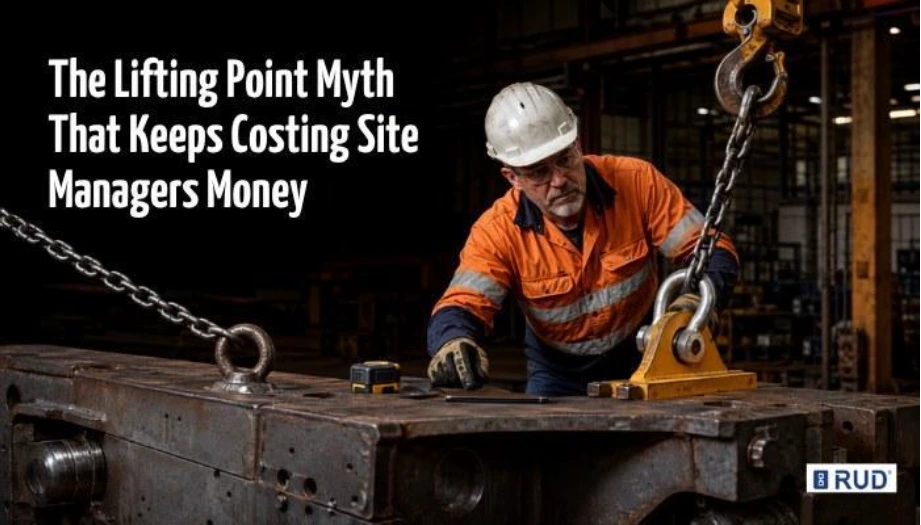
A welded eye bolt looks strong enough to lift with. But looking strong and being compliant are two different things, and site managers only find that out when an inspector flags the hardware.
At RUD.com.au, we’ve supplied engineered lifting points to mining, construction, and manufacturing sites from Brisbane and Ipswich for over 40 years. In that time, we’ve watched a single bad assumption about rigging compliance stall entire operations.
This article covers:
- Why welded eye bolts don’t meet lifting point compliance
- What non-compliant hardware costs your operation
- How to verify compliance before you order
If you’re responsible for procurement or safety decisions on site, the sections ahead will give you the full picture.
Why Welded Eye Bolts Don’t Qualify as Compliant Lifting Points
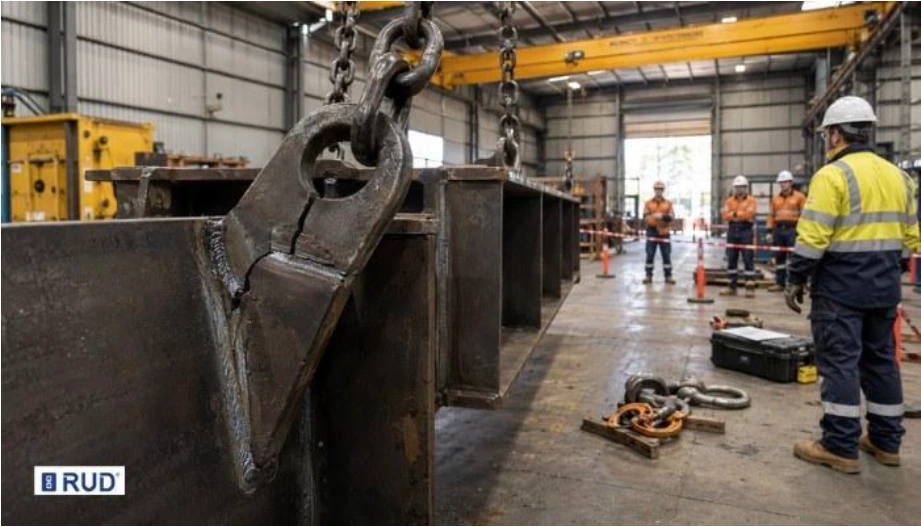
A standard welded eye bolt isn’t engineered, certified, or traceable enough to meet lifting point compliance in Australia. And yet, they’re still one of the most commonly used attachment points on rigs and equipment across the country.
A compliant lifting point needs design verification, individual identification, and a rated working load limit backed by documentation. Safe Work Australia requires loads to be suspended only from manufacturer-designated lifting points that have been properly designed and fitted. And generic welded eye bolts don’t come with any of that.
That’s not just a paperwork issue. We’ve pulled lifting points off rigs in Brisbane and the Bowen Basin that looked fine but had zero traceability behind them. No test certificates, no rated load capacity, and no way to confirm the bolts could handle what was connected to them.
How Non-Compliant Lifting Points Damage Lifting Equipment in Rigging Operations
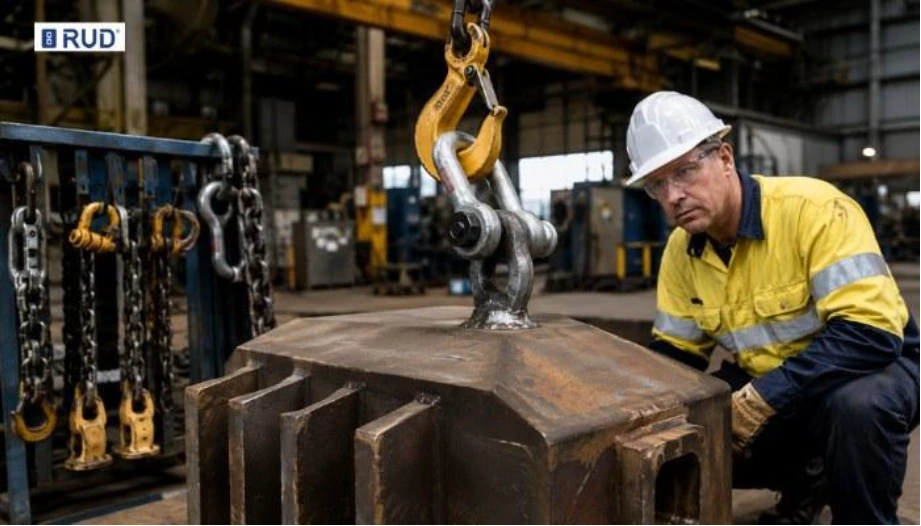
What happens when a site inspection flags your lifting points as non-compliant? For site managers, it means downtime, personal liability, and replacement costs that weren’t in the budget.
Here’s what rigging operations deal with when lifting gear fails compliance:
- Downtime and Idle Crews: One failed inspection can ground a crane and rigging setup for days. Every idle hour burns through crew wages, hire costs, and project schedules.
- Liability on the Site Manager: When non-compliant lifting points cause an incident, liability falls on whoever signed off on the equipment (and when something goes wrong, everyone starts looking for someone to blame).
- Costly Replacements After Failure: In one documented excavator lifting point near-miss, workers used access steps as attachment points and a weld failed, dropping an excavator roughly 10 metres. Replacing damaged lifting equipment after that costs far more than specifying correctly upfront.
And frankly, specifying compliant lifting points during procurement would prevent every cost listed above. It’s a fraction of the price compared to a single failed inspection.
Why Working Load Limit Fails When Chain Slings Meet the Wrong Hardware
The fastest way to protect a rated sling investment is to verify that every component in the lift shares the same working load limit standard.
Every chain sling, wire rope, hook, and connector in a rigging setup carries its own verified capacity. And if any single component lacks that verification, the entire lift defaults to the weakest point in the chain.
That’s why the attachment point is so often the problem. A rated chain sling connected to an unrated eye bolt creates an unknown failure point under load (a scenario no rigger wants to discover mid-lift). The result can range from sudden loss of load control to complete equipment failure.
On more than one site, we’ve found every sling in the setup certified and rated. But the eye bolt connecting them to the load had no capacity verification at all. That single gap put the entire rigging operation at risk of an unplanned shutdown during inspection.
What Australian Standards Require for Load Testing and NATA Accreditation
AS 4991 sets the minimum design, manufacture, and testing requirements for lifting points used on Australian sites. And yet, many test certificates floating around worksites have no NATA backing behind them (that makes them worthless during an audit).
These are the requirements a compliant lifting point meets that a generic welded eye bolt doesn’t:
| Requirement | Compliant Lifting Point | Generic Welded Eye Bolt |
|---|---|---|
| Design Verification | Engineered to a specific load and application | No formal design process |
| Load Testing | Proof tested to 2.0x the rated working load limit | Untested or self-declared |
| Test Certificate | Issued by a NATA-accredited facility | No accreditation behind the result |
| Traceability | Individual identification, material records, batch tracking | No records available |
Auditors on mining and construction sites in Australia will reject any test certificate that lacks NATA accreditation. Without it, the proof of load testing holds no regulatory weight.
From there, the question becomes what to order when replacing non-compliant lifting equipment.
Selecting the Right Lifting Devices, Lifting Slings, and Wire Rope Slings
Every piece of lifting hardware you order should be able to pass an inspection on day one. That takes verified load ratings, material traceability, and an individual test certificate from a NATA-accredited facility.
For lifting devices, that certificate needs to confirm the exact working capacity of each unit. The same goes for your lifting slings, and the right choice depends on the conditions. Harem wire rope slings can handle abrasion and outdoor exposure well, while chain options perform better in high-heat environments.
But the sling is only part of the picture. WorkSafe WA has documented the risks of using unrated lifting points on site, including sudden failure and total loss of load control. So, before you sign off on any purchase order, ask your supplier for full testing documentation (if they can’t hand it over, you’ve got your answer).
Why Rigging Safety Depends on the Right Wire Rope
Every section above points to the same root issue: rigging safety isn’t a single product decision. It’s a chain of verified components, and the wire rope, slings, and lifting point at the top all need to work together.
And of every component in that chain, the attachment point is the one most operations overlook. And yet, it’s often the lowest-cost component to upgrade.
Thankfully, if you specify tested lifting points on day one, you too can prevent failed inspections, protect your equipment, and keep your crew safe.
RUD Australia supplies lifting points with full traceability and NATA-accredited load testing out of Brisbane and Ipswich. If your rigging gear needs a review, get in touch with our team.

